The sorghum supply chain is relatively straightforward but requires specific handling to maintain quality.
-
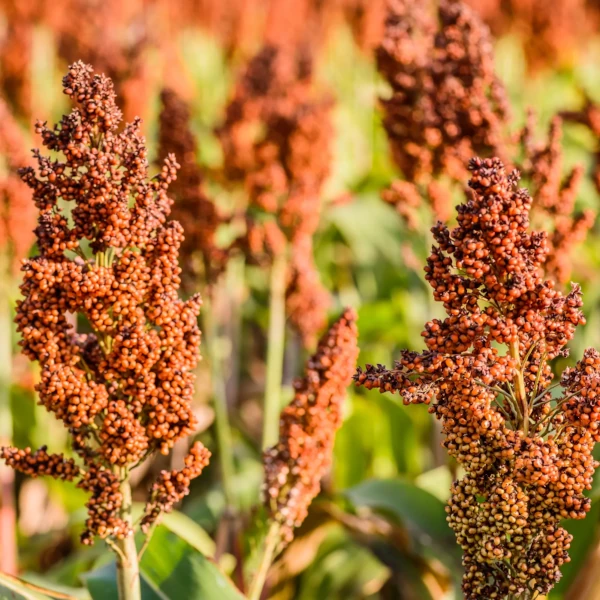
Cultivation & Harvesting: Sorghum is a hardy crop with a deep root system. It is typically harvested when the grains are hard and have reached a low moisture content. Harvesting can be done with standard grain combines.
-
Threshing & Drying: The harvested grain is threshed to separate the seeds from the panicle (seed head). While sorghum is drought-tolerant, post-harvest drying may still be necessary to reduce moisture to a safe storage level of ~12-13%.
-
Storage: Sorghum grains are small and hard, making them relatively easy to store with proper aeration to prevent pest infestation and mold.
-
Processing & Milling: For human consumption, sorghum is processed similarly to other grains:
-
Decortication/Dehulling: Removing the tough, outer bran layer.
-
Milling: Grinding the grains into whole flour or refined flour.
-
Popping: Similar to popcorn, some sorghum varieties can be popped as a snack.
-
Malting: Germinating the grains to produce malt used for brewing traditional beers.
-